Heat Pump Blowing Cool Air in Heating Mode? What Homeowners Should Check
You wake up to a chilly Sacramento morning, walk over to the thermostat, and bump the heat up to 68. A few minutes later, air is moving through the vents, but it doesn’t feel warm. It feels cool. Maybe even cold.
If that is happening at your house, you’re not alone. This is one of the most common calls Sacramento homeowners make about their heating systems every fall and winter. Cool air from a heat pump doesn’t always mean the system is broken. Sometimes it’s normal operation. Sometimes it’s a quick fix like a dirty filter. And sometimes it’s a real issue that needs heat pump repair in Sacramento before it gets worse.
This guide walks you through what to check, what to leave alone, and when to shut the system off and call a pro.
Key Takeaways
- Heat pump air usually runs 90 to 100 degrees, which feels cooler than furnace air at 120 to 140 degrees
- Short bursts of cool air during defrost cycles are normal in November weather
- Always check the thermostat mode and air filter before assuming the system has failed
- Ice on the outdoor unit, a silent fan, or burning smells all point to a service call
- Cool air combined with weak airflow can signal a refrigerant, valve, or compressor issue
- When in doubt, shut the system off at the thermostat and schedule a professional diagnosis
Why Heat Pump Air Doesn’t Feel as Hot as Furnace Air
A heat pump doesn’t create heat the way a gas furnace does. It moves heat from the outside air into your home using refrigerant. Even when it’s 40 degrees outside, there is heat in that air. Your heat pump pulls it in.
Before you assume something is wrong, hold your hand at a supply vent for 30 to 60 seconds. If the air feels neutral or slightly warm, your system may be working correctly.
Check Your Thermostat Settings First
Before troubleshooting anything else, look at the thermostat.
- Confirm the mode is set to Heat, not Cool or Auto. On some smart thermostats, Auto can hold the system in cooling mode when indoor temperatures read warm from morning sun.
- Check that the fan is set to Auto, not On. When the fan runs constantly, it blows air even when the system isn’t actively heating, which feels cool.
- Make sure the set temperature is at least 3 to 5 degrees above the current indoor temperature. A small gap may not trigger a full heating cycle.
Pro Tip 💡: If your thermostat was recently replaced or reprogrammed, the wiring for heat pump operation is different from a standard furnace setup. A mis wired thermostat is a common reason a heat pump behaves oddly right after installation.
Your Heat Pump May Be in Defrost Mode
When outdoor temperatures drop into the 30s and 40s, moisture can freeze on the outdoor coil. To prevent damage, the system briefly reverses itself, using indoor heat to melt the ice off the outdoor unit.
During a defrost cycle:
- The outdoor unit may steam or drip water
- The indoor blower may pause or blow cool air for a few minutes
- Auxiliary electric heat usually kicks on to keep indoor air comfortable
A normal defrost cycle lasts about 5 to 15 minutes and happens every 30 to 90 minutes in cold, damp weather. If cool air stops and warm air returns within 15 minutes, you’re watching the system do exactly what it’s designed to do.
If defrost cycles run longer than 15 minutes or repeat back to back for an hour, something is off.
Check the Air Filters and Vents
Airflow problems are one of the top reasons a heat pump feels weak.
Walk through the home and check the following:
- Pull the air filter and hold it up to a light. If you can’t see light through it, replace it. A clogged filter chokes the system and lowers the output air temperature.
- Look at every supply vent. Make sure no rugs, curtains, or furniture are blocking them.
- Check return air grilles for dust buildup or blockage.
- Open any louvers or dampers that were closed off during warmer months.
Most Sacramento homes need filter changes every 60 to 90 days. Homes with pets, allergies, or recent wildfire smoke exposure may need more frequent changes.
Heads Up ‼️: If your filter has been in place for 6 months or longer and the system has been struggling, a fresh filter alone may not fully solve the problem. Dust can migrate past a saturated filter and coat the indoor coil, which requires professional cleaning.
Look at the Outdoor Heat Pump
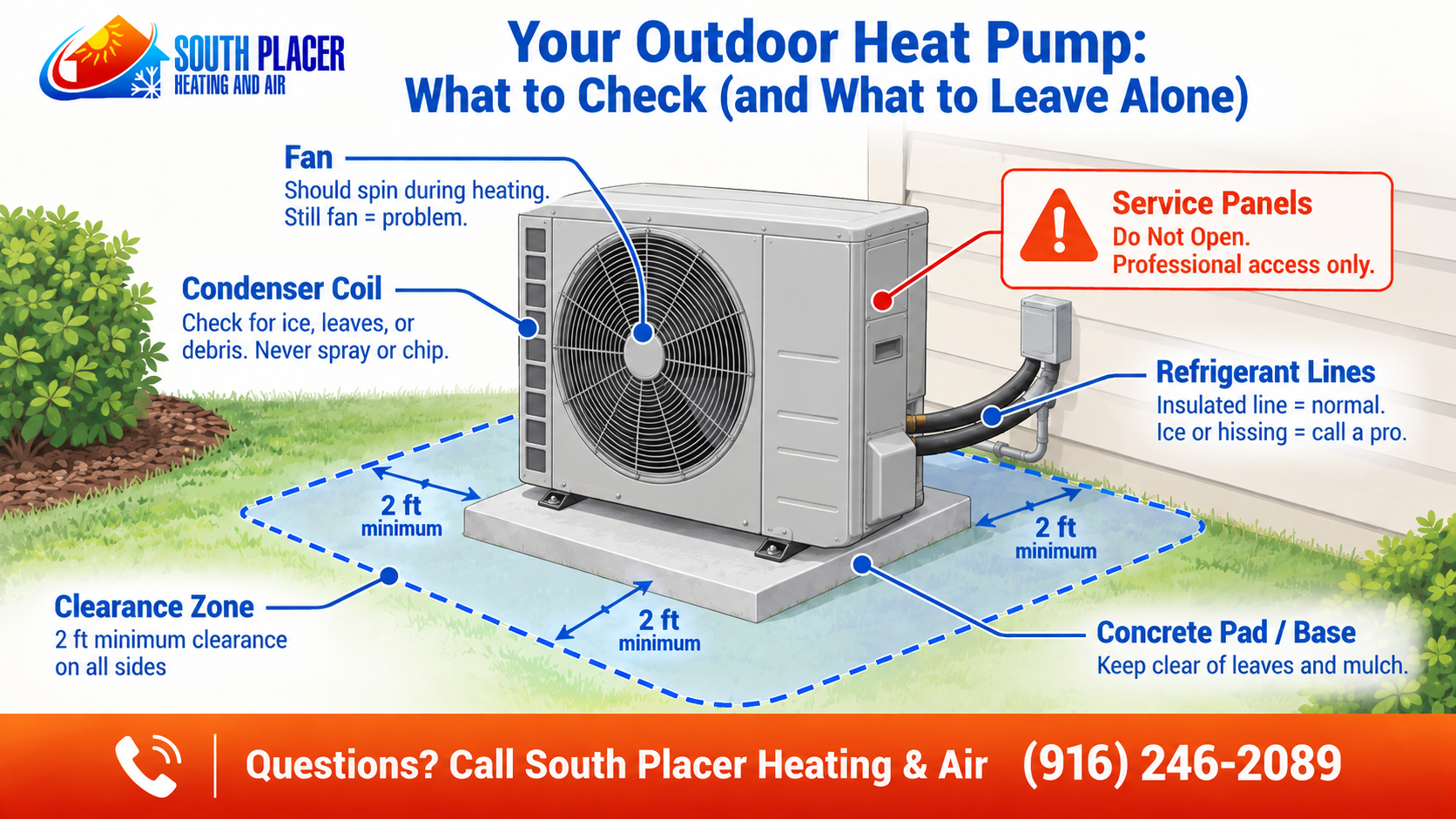
Head outside and take a look at the unit. Do not open any panels or remove any screws. This is a visual check only.
Look for:
- Ice buildup. Some frost is normal on November mornings. A solid block of ice covering the coil or fan is not.
- Fan movement. The top fan should be spinning during a heating cycle. If it’s still, that’s a red flag.
- Debris. Leaves, mulch, or plastic bags stuck against the coil restrict airflow.
- Noises. Buzzing, humming without spinning, clicking, or grinding all point to mechanical problems.
- Smells. A burning or electrical smell means shut the system off right away.
Give the unit at least 2 feet of clearance on all sides. Trim back shrubs and clear leaves gently by hand. Never spray water into the coil or try to chip ice off with a tool. Both can cause damage that turns a small issue into a full replacement.
When Cool Air Signals a Real Heat Pump Problem
If the thermostat, filter, and outdoor unit all look fine and the air is still cool, the problem is likely internal. Here are the most common causes that require heat pump repair in Sacramento.
Reversing Valve Problems
The reversing valve is what allows a heat pump to switch between heating and cooling. When it sticks or fails, the system can stay in cooling mode even though the thermostat is calling for heat. You’ll feel cold air even when the system isn’t in a defrost cycle.
This is a professional repair.
Low Refrigerant or a Refrigerant Leak
A heat pump needs a specific refrigerant charge to move heat efficiently. Low levels almost always point to a leak somewhere in the system. Symptoms include:
- Weak warm air
- Longer run times
- Ice on refrigerant lines
- Hissing sounds near the outdoor unit
Refrigerant work is regulated by the EPA and must be done by a licensed technician.
Outdoor Fan or Coil Problems
If the outdoor fan isn’t turning, the system can’t pull heat from the outside air. A frozen or damaged coil creates the same result.
Both issues cause the unit to blow cool air or shut down on high-pressure safety switches.
Compressor or Electrical Problems
The compressor is the heart of the heat pump. When it fails or shorts out, the system may hum, click, or trip a breaker without producing warm air.
Compressor issues are among the most expensive heat pump repairs and often lead to a replacement conversation.
Thermostat or Control Problems
A failing thermostat, a bad control board, or a mis wired heat pump can send the wrong signals to the system. If your thermostat display looks off, resets on its own, or seems delayed, the control side is worth a professional check.
Auxiliary Heat Isn’t Operating Correctly
Most Sacramento heat pumps use electric strip heaters that turn on when outdoor temperatures drop or during defrost. The blower will still run, but the air won’t feel warm during the coldest parts of the morning if:
- Those strips have failed
- Blown a fuse
- Lost a connection
A licensed HVAC pro can test each strip and the sequencer that controls them.
How to Tell the Difference Between Cool Air and No Heat
Cool air and no heat are related but different problems. Sorting them out helps you describe the issue clearly when you call for service.
- Cool air with strong airflow usually means the system is running but not heating. Look at the reversing valve, refrigerant, or auxiliary heat.
- Cool air with weak airflow points to a filter, blower motor, ductwork, or frozen coil issue.
- No air at all means the blower isn’t running. That could be an electrical, control, or safety switch problem.
- Warm air that turns cold and never recovers often points to defrost problems or short cycling.
When you call, describe exactly what you feel at the vent, what the thermostat reads, and what the outdoor unit is doing. The more detail you share, the faster a technician can prep the truck.
When to Turn the System Off and Call a Pro
Some issues can wait until morning. Others should not. Turn your heat pump off at the thermostat and call for service right away if you notice any of the following:
- Burning, electrical, or plastic smells
- Smoke from any part of the system
- Ice completely encasing the outdoor unit
- A breaker that keeps tripping
- Loud grinding, banging, or metal-on-metal sounds
- Water pooling around the indoor air handler
Running a heat pump with any of these symptoms can damage the compressor, the electrical system, or the surrounding equipment. It can also create a safety risk in the home.
Why Sacramento Homeowners Trust South Placer Heating & Air
Sacramento winters bring cold mornings, damp fog, and a mix of housing stock that puts real demands on a heat pump. South Placer Heating & Air has served local homes for more than 15 years with NATE-certified technicians trained on heat pump systems.
- Straightforward diagnostics with no pressure to buy more than you need
- Itemized estimates before any work starts
- Licensed, bonded, and insured (CA License #940668)
- 24/7 emergency service, 365 days a year
- Every job finished with a Final Touch quality inspection
Schedule Heat Pump Repair in Sacramento
If your heat pump is blowing cool air and the quick checks in this guide haven’t solved it, the next step is a proper diagnosis.
Call South Placer Heating & Air at (916) 246-2089 or schedule a free estimate online. A NATE-certified technician will come to your home, walk you through what’s happening in plain language, and give you a written estimate before any work begins.
Frequently Asked Questions
Every 60 to 90 days for most Sacramento homes. Change filters more often with pets, allergies, or recent wildfire smoke exposure. A clogged filter is one of the most common causes of weak heat. Simple repairs like a bad capacitor or thermostat can be finished in an hour or two. Refrigerant leaks, reversing valves, and compressor work take longer and sometimes require parts orders. A technician can give you a clear timeline after diagnosis. If your heat pump is more than 12 to 15 years old, has needed multiple repairs in the past 2 years, or is losing capacity in cold weather, replacement may be worth discussing. Ask the technician to compare the repair cost against the value of a new, higher-efficiency system. How Often Should I Change My Air Filter in Winter?
How Long Does a Heat Pump Repair Take?
When Should I Consider Replacing Instead of Repairing?

Operations Manager / Director of South Placer Heating and Air
Whether it be air conditioning installation in El Dorado Hills or heating repairs in Rocklin, Sacramento, El Dorado and Placer Counties, South Placer Heating and Air provides guaranteed heating, cooling, home energy systems, and many other products, services, and solutions to make you and your family safer and more comfortable year-round. We’re dedicated to:
24/7 emergency service.
fast, expert repairs and installations whenever you need them.
saving you money and making your home greener and more energy efficient.
unparalleled customer service.
standing behind every product and service we offer.
getting the job done right the first time and assuring it with our “Final Touch” quality inspection.
We provide free estimates for repair and ongoing maintenance from our licensed, bonded, insured and NATE-certified professionals for all makes and models of air conditioners, furnaces, heat pumps and indoor air quality systems.